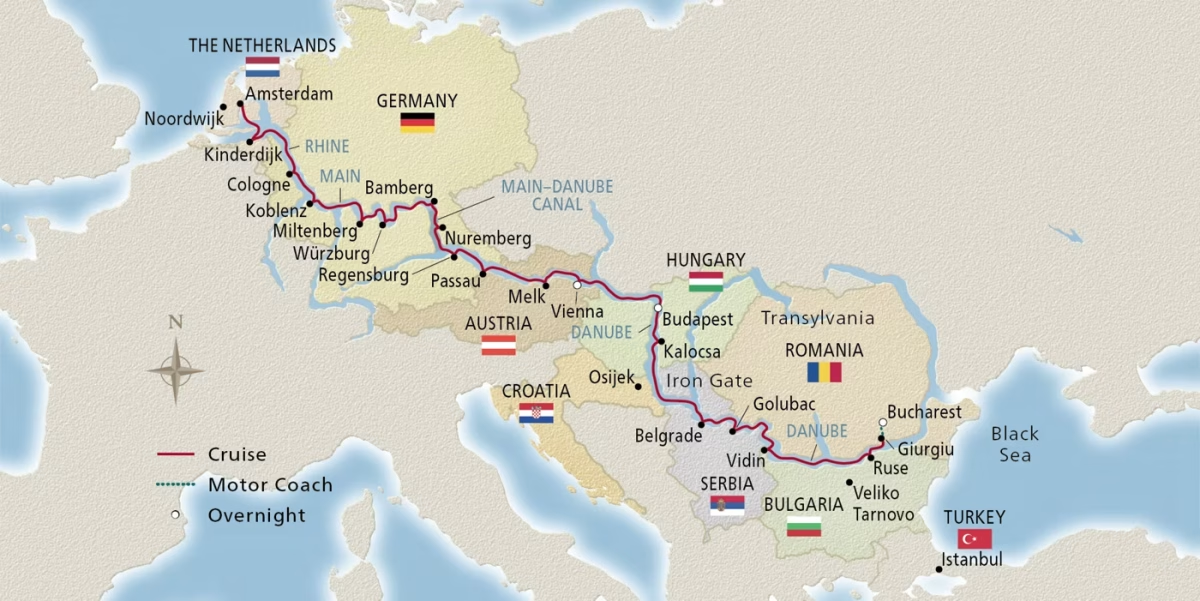
This itinerary can travel in the reverse direction.
DAY 1 – AMSTERDAM, THE NETHERLANDS
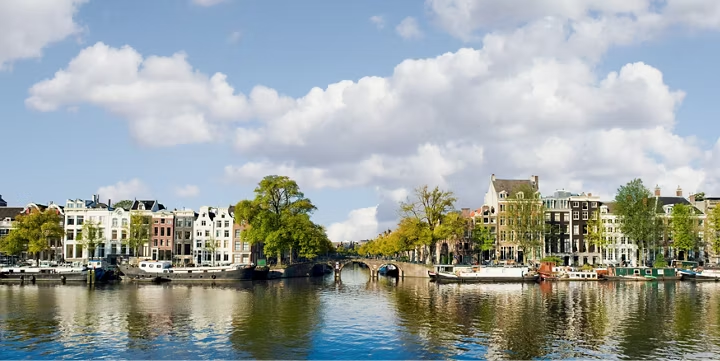
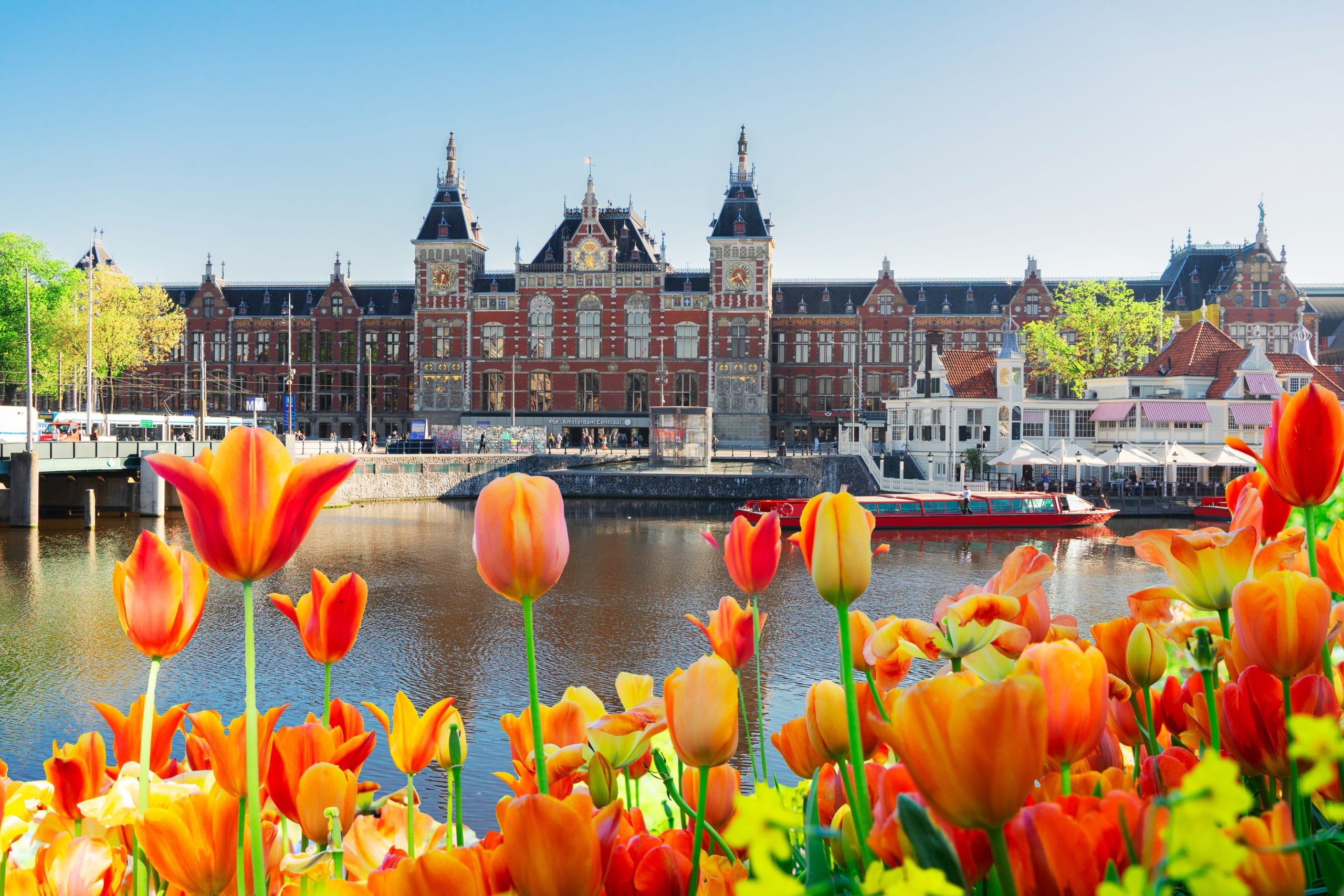
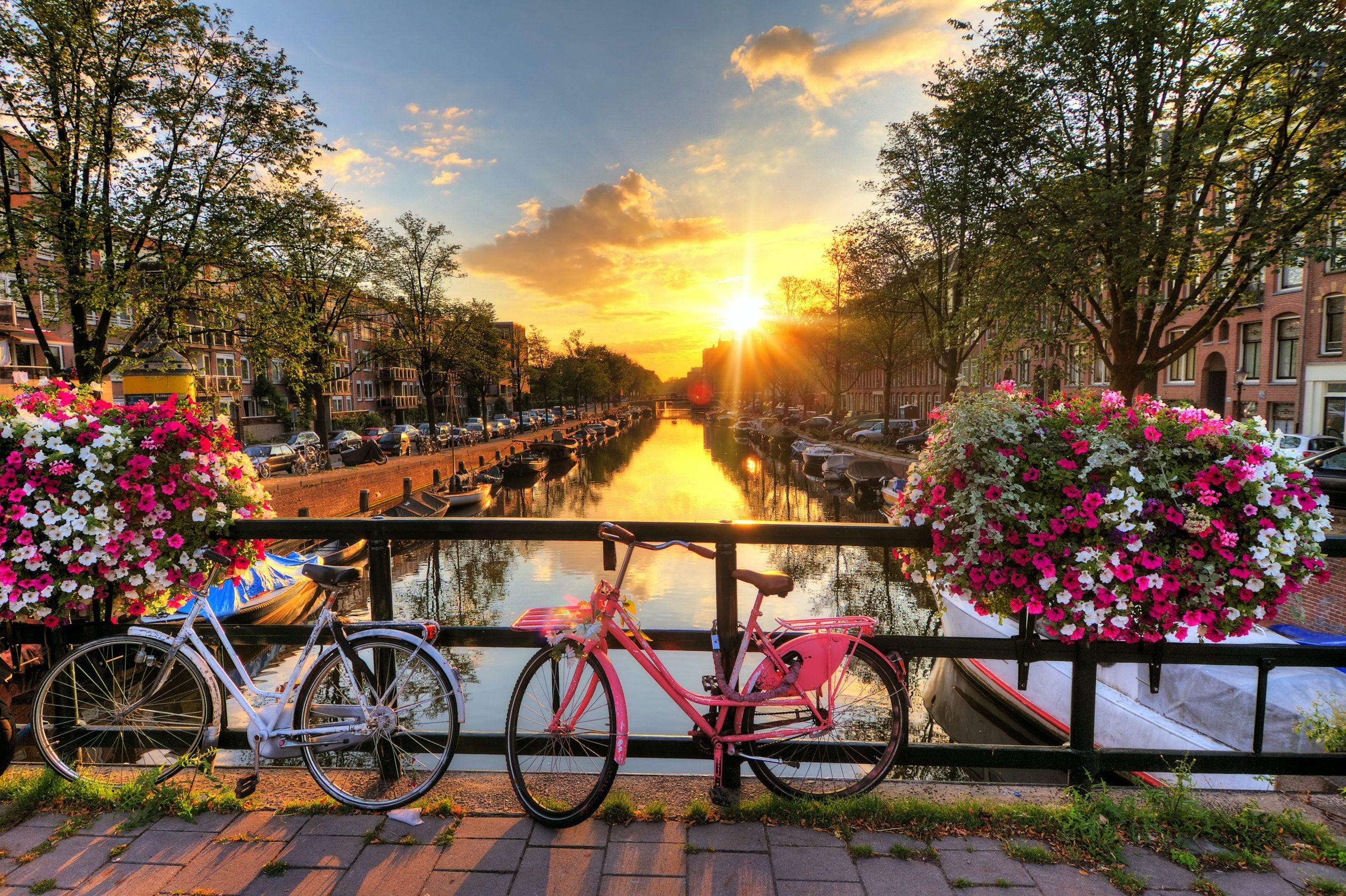
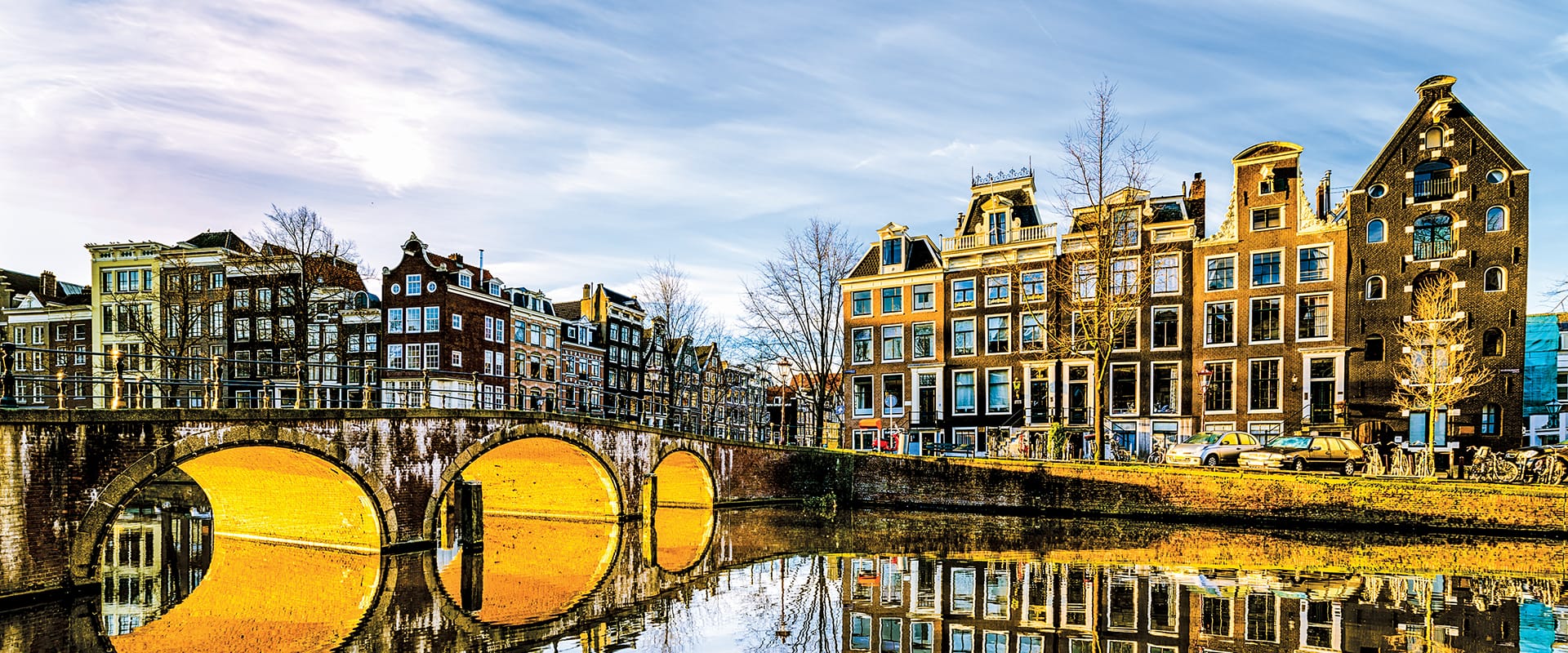
Embark your ship and settle into your stateroom. A city of charming canals, elegant gabled houses, splendid museums and abundant bicycles, the Dutch capital of Amsterdam is a delight to explore. Its patchwork of waterways forms about 90 islands connected by 1,500 bridges. The legacy of the Dutch Golden Age lives on in gilded manses and in the lush paintings of Rembrandt and other Dutch masters that adorn the Rijksmuseum, The Netherlands’ grand repository of art and cultural history. Discovering Amsterdam is a pleasure best pursued on foot; visitors line the tranquil canals and linger over Dutch pancakes, or take a stroopwafel to go.
DAY 2 – KINDERDIJK
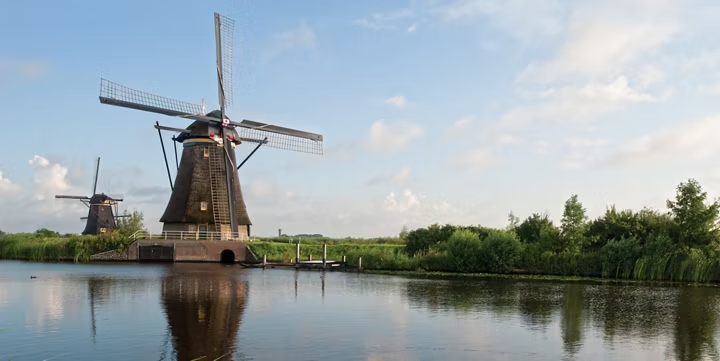
Kinderdijk is a village community in the Alblasserwaard province. This corner of South Holland, part of the scenic Waal and Merwede regions, has long been shaped by Rhine Delta waters. Kinderdijk is most known for its 19 remarkably preserved 18th-century windmills. The charming hamlet is located amid low-lying polders, tracts of land reclaimed from the sea by the power of the windmills and enclosed by embankments, or dikes. This legendary place calls to mind the 1865 novel Hans Brinker, in which a heroic boy plugs his finger into a ruptured dike.
Scenic Sailing: Waal & Merwede
Sail the bucolic waters of the Rhine, deep into the Rhine–Meuse–Scheldt Delta, as classic Dutch landscapes unfurl all around. Flat farmland, charming windmills and svelte poplar trees line the shores, and vast tracts of land stretch in all directions, growing all manner of bounty, from tomatoes to tulips. Gaze upon Friesian cows and tidy villages with their neatly laid farmhouses and marvel at how much of this land was reclaimed from the sea, with the aid of traditional windmills and the construction of dikes.
DAY 3 – COLOGNE, GERMANY
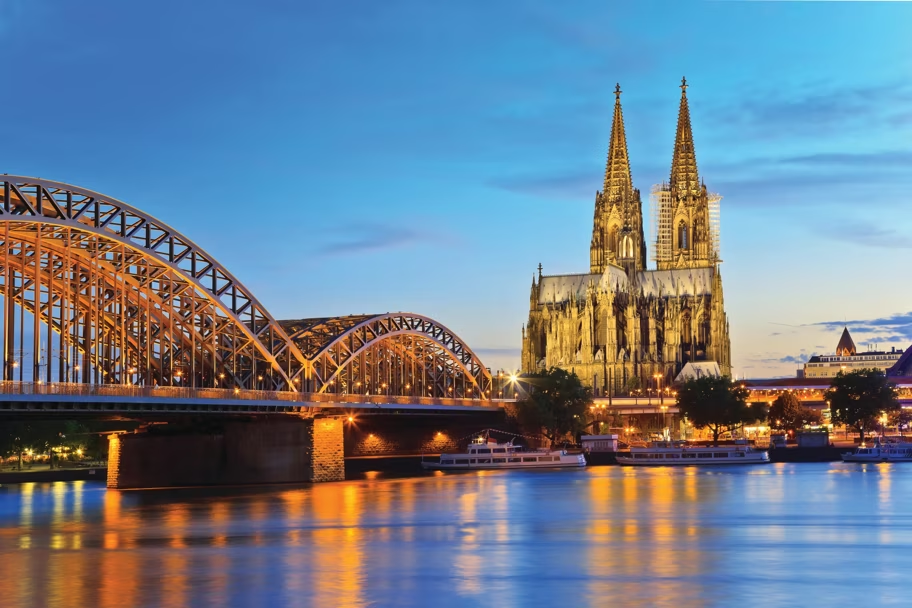
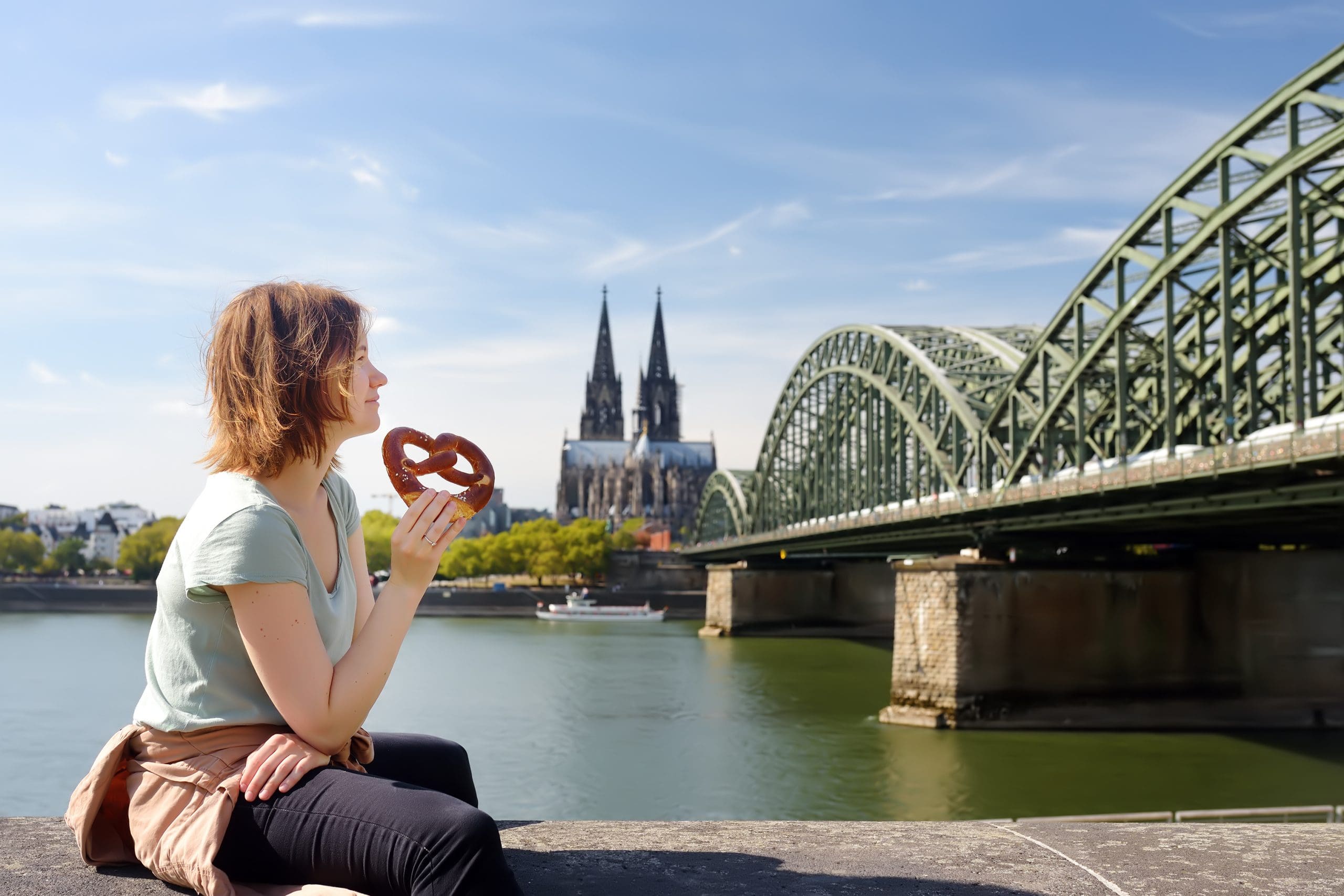
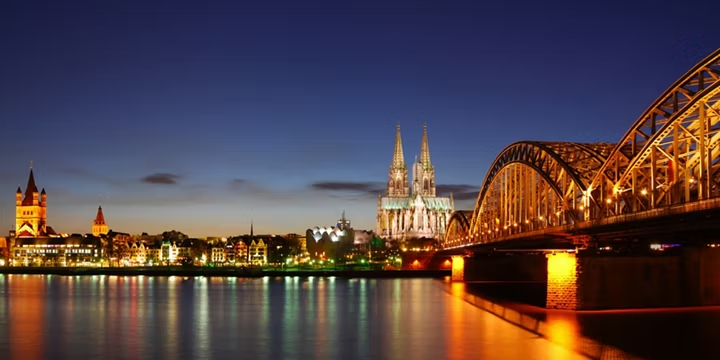
Cologne reveals its Roman heritage in its city layout and the ancient ruins that lie scattered through the town. Cologne’s modern plazas and Hohe Strasse host welcoming shops, enticing restaurants and cologne boutiques. Of note is the city’s 13th-century cathedral, a stunning example of Gothic artistry and a UNESCO World Heritage Site. Having survived Allied bombs during World War II, the cathedral’s imposing twin spires are visible for miles and its stained glass windows fill the interior with brilliant colored light. Its steps lead to a platform with astounding views.
DAY 4 – KOBLENZ
Koblenz is a traditional German city, founded more than 2,000 years ago. This former trading settlement rests on a massif of the Middle Rhine Highlands. Its cobblestone streets, wood-beamed houses adorned with flowers, ancient market square and medieval churches recall the fairy-tale Germany of old. At the German Corner, a massive equestrian statue of Prince William I observes the lovely riverside scene. The famed Teutonic Knights set up their first base here in 1216. The Romanesque Basilica of St. Castor, Koblenz’s oldest building, dates to 836.
Scenic Sailing: Middle Rhine
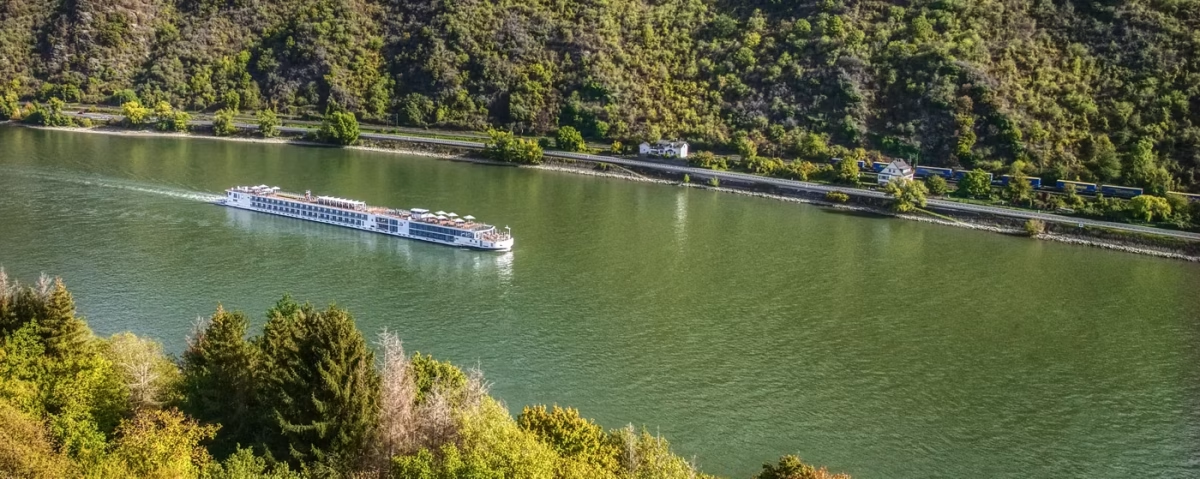
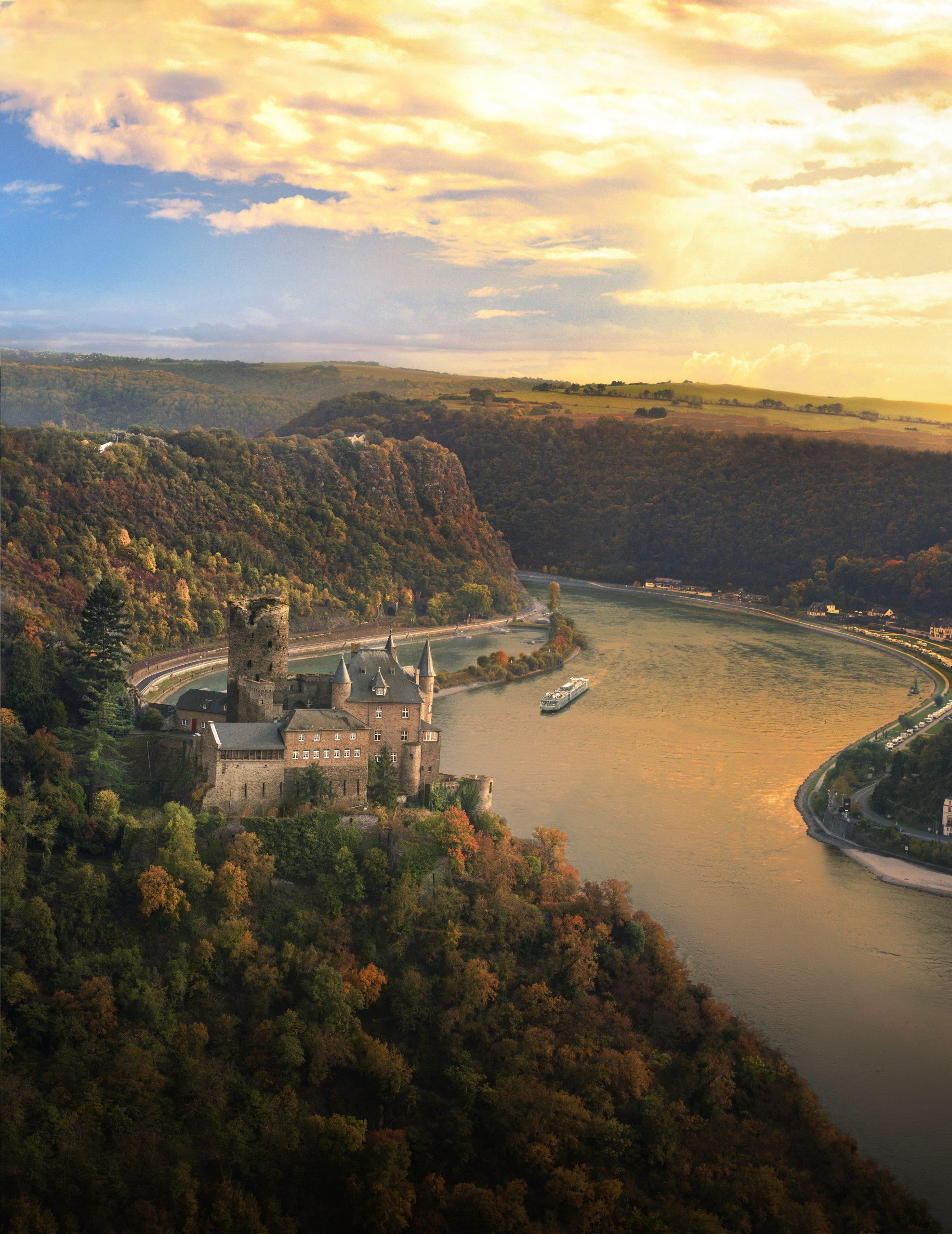
The Rhine River flows through one of Germany’s most scenic regions. As you sail its most picturesque stretch, the UNESCO World Heritage Site of the Middle Rhine, you will pass vineyard-blanketed hills whose steep slopes require vintners to pick grapes by hand, keeping a centuries-old tradition alive. Splendid castles line the banks, all of which have stories to share, and the Lorelei Rock presides at a dramatic curve in the river. This infamous river maiden mesmerized sailors with her song and lured them to their demise at her feet.
DAY 5 – MILTENBERG
Scenic Sailing: Main River, Spessart
Journey along one of Germany’s most important waterways today, passing landscapes that embody the country’s scenic beauty and storybook charm. You will sail by quaint riverside villages, undulating farm country and the sylvan forests of the Spessart woodlands. Along the way, you just may lose yourself in the dreamy canvases of half-timbered houses, historic castles and splendid palaces. This is the Germany once ruled by dukes and brought to magical life by the imagination of the Brothers Grimm, who grew up in the town of Hanau and wove fantastic tales from these banks.
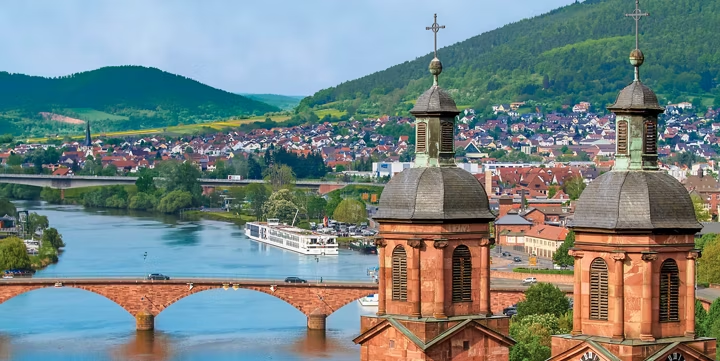
The Franconian town of Miltenberg on the Main River is lively and romantic, nestled amid one of Germany’s fine wine-producing regions. Along its cobblestone streets and crooked lanes, medieval timber-framed houses are plentiful, giving a feeling of stepping back in time. The 13th- to 14th-century Miltenberg Castle dominates the town and the beautiful Renaissance Zum Riesen inn, hosting travelers since 1411, stands out for its rich history. The town prospered when it gained escort rights along the Main River; two forts once guarded the river crossing here.
DAY 6 – WURZBURG
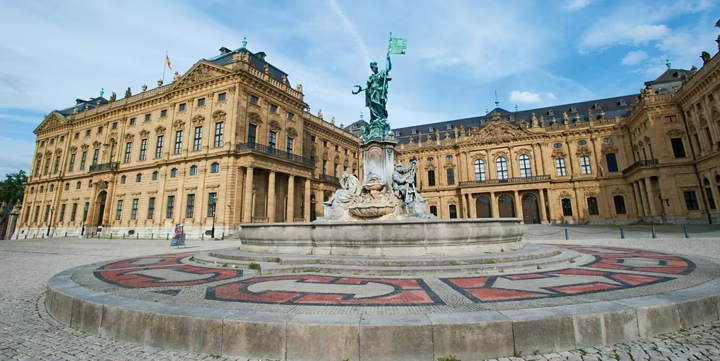
Surrounded by Franconian vineyards, Würzburg was heavily damaged during World War II, but has since been completely restored. This prestigious university city is a jewel of baroque architecture. Its most pristine example of pomp and glory is the great Bishops’ Residenz palace, built in 1744 for the prince-bishop; his unwavering support of artists is evidenced by the sweeping staircase and magnificent ceiling frescoes by Tiepolo. Other landmarks include the medieval, statue-lined Old Main Bridge and Marienberg Fortress, originally a Celtic hill fort and later residence of the bishops. The city remains a major wine-making center, hosting Germany’s oldest and largest vineyard.
DAY 7 – BAMBERG
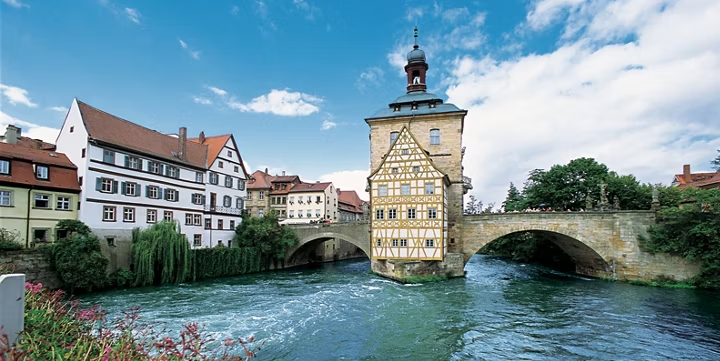
Founded in 902, Bamberg remains a medieval-looking city known for its symphony orchestra and rauchbier, specialty smoked beer. The city’s winding streets are filled with baroque patrician houses and are home to the stunning 11th-century Cathedral of Holy Roman Emperor Heinrich II, housing his tomb and that of Pope Clement II. Bamberg is especially noted for its Altes Rathaus, or Old Town Hall, situated on a twin-arched bridge over the Regnitz River, and for the old bishop’s houses: the 16th-century Alte Hofhaltung (Old Court) and 17th-century Neue Residenz (New Residence).
Scenic Sailing: Main-Danube Canal, Germany
As far back as 1,200 years ago, visionary Frankish Emperor Charlemagne contemplated connecting the Rhine, Main and Danube Rivers so ships could travel the length of Europe. Today, his dream dramatically comes to life. The Main-Danube Canal employs 16 stair-step river locks that allow vessels to travel 2,200 miles through 10 countries, from the North Sea coast of Holland to the Black Sea shores of Romania.
DAY 8 – NUREMBERG
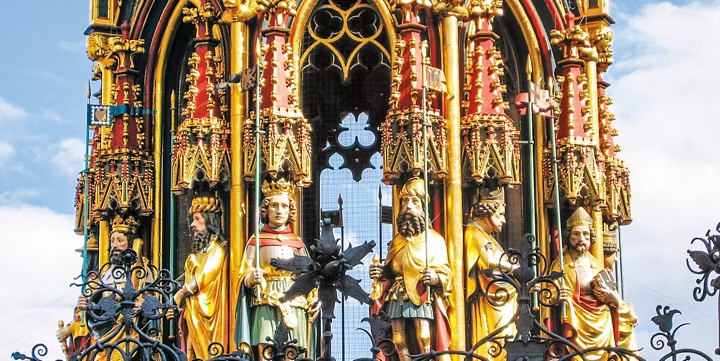
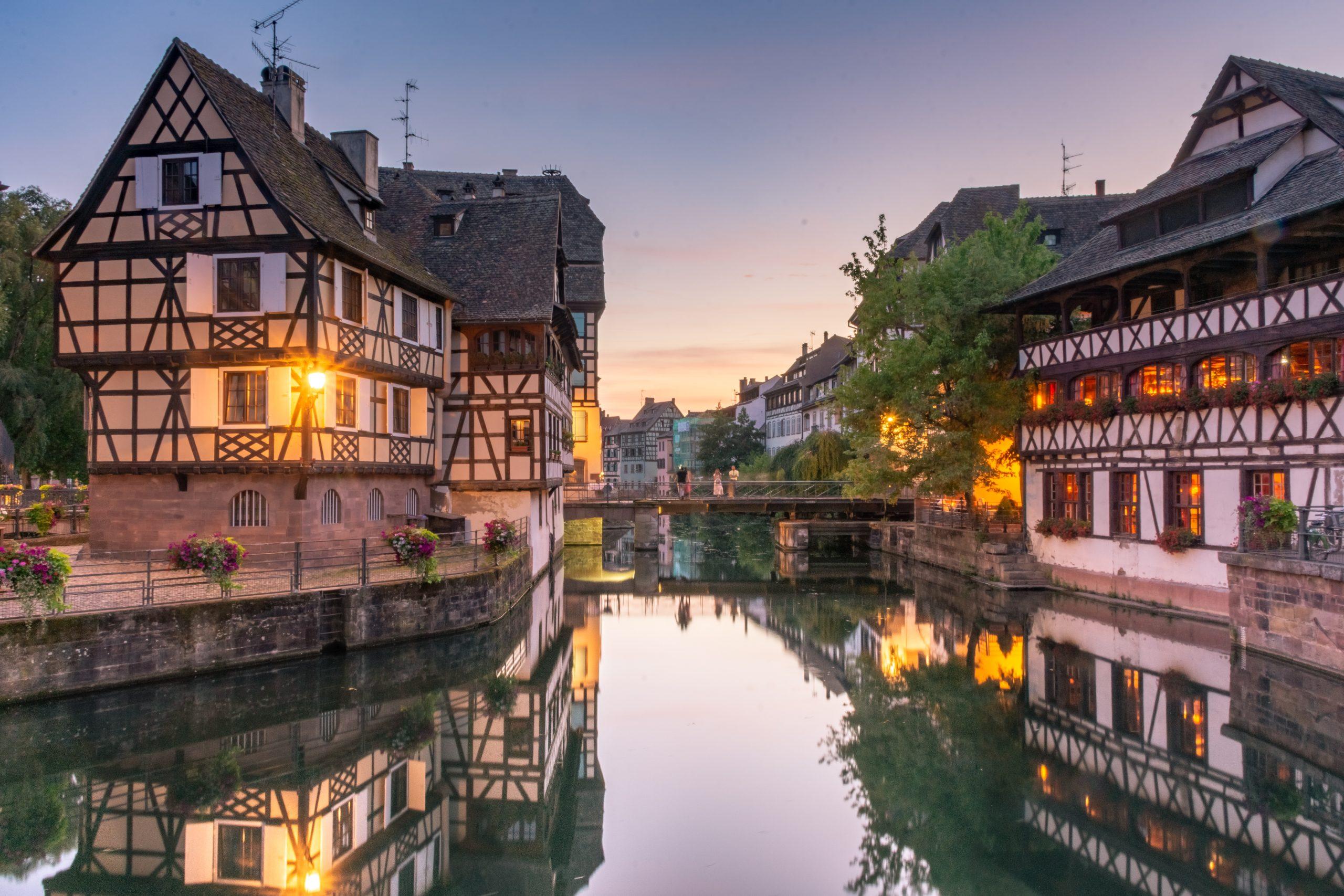
The second-largest city in Bavaria, Nuremberg is filled with traditional half-timbered houses and Gothic churches with intricate spires. Although nearly destroyed during World War II, the remaining medieval city walls stretch some three miles and feature original gateways and 80 original watchtowers. Nuremberg is well known historically for its metal and toy craftsmanship. But it is infamous for its role in World War II, first as the site of Zeppelin Field’s Nazi rallies and later as the site of the war crimes trials at the Palace of Justice that captured the attention of a generation.