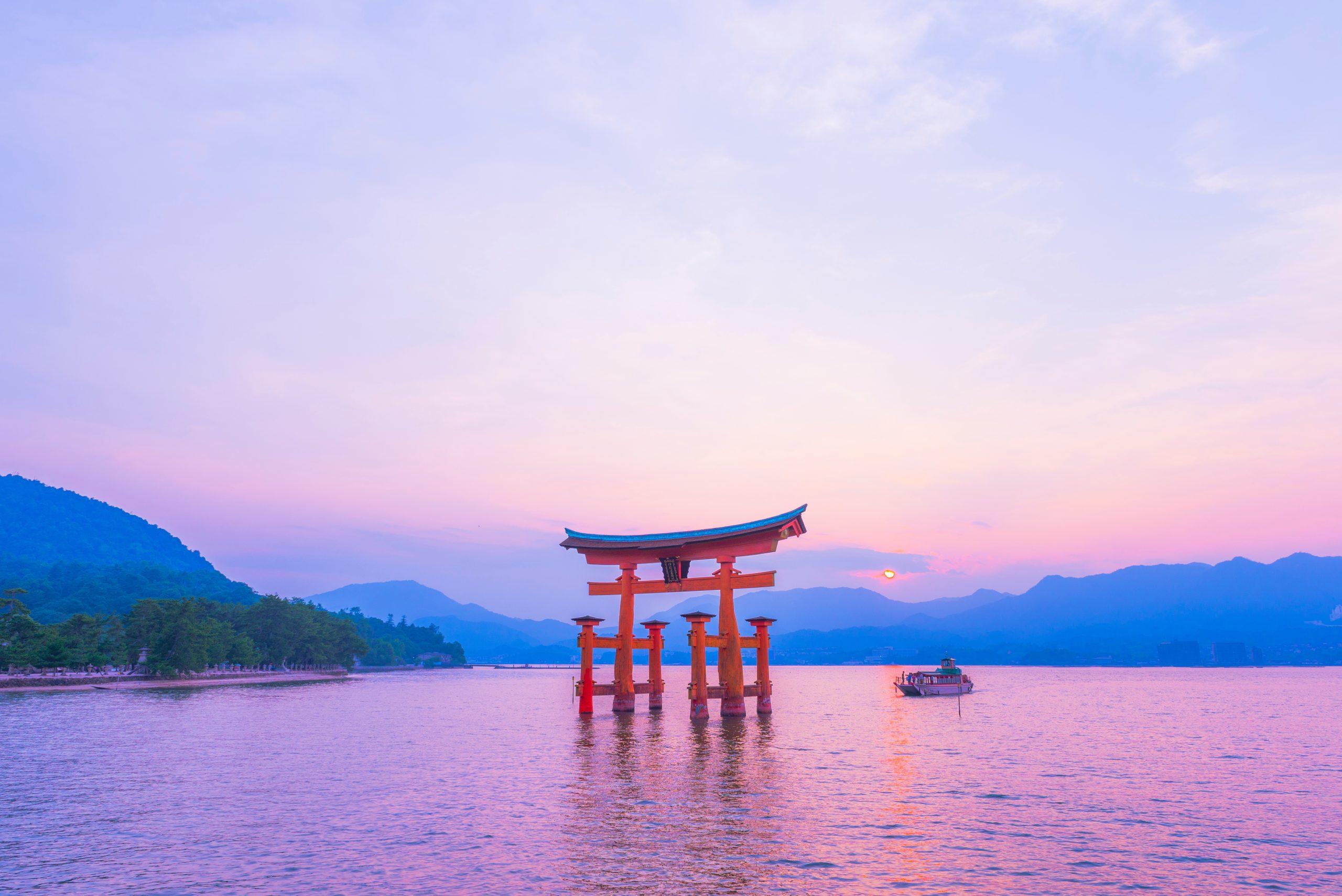
Multiple amazing excursions available on this itinerary – please ask us for further information.
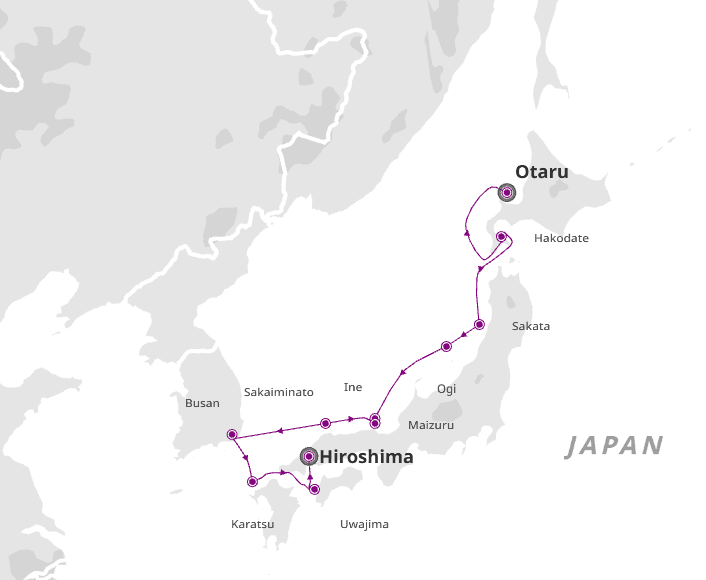
DAY 1 – OTARU
An important port on Hokkaido, Japan’s northernmost island, Otaru retains original architecture. Restored warehouses along its canal, lined with Victorian street lamps, house restaurants and boutiques selling sake, music boxes and renowned Otaru glass. Rooted in the herring industry, the town’s trading history is evident from Hokkaido’s first railway line terminal to the Herring Mansion on the outskirts, once owned by wealthy herring fishermen.
DAY 2 – HAKODATE
The city of Hakodate in Hokkaido is Japan’s northernmost island and is well-known for its seafood, for sale daily at the morning market. Mount Hakodate, reached by gondola. watches over the bustling city. While the area is rich in hot springs, it is best known for the famous snow monkeys who bathe in the hot springs of Yunokawa Onsen at the Hakodate City Tropical Botanical Garden.
DAY 3 – SAKATA
Sakata, a port city on the Mogami river, thrived on rice and safflower trade. The traditional 1893 Sankyo Rice Storehouses, shaded by zelkova trees, are now a cultural hub with shops. The city’s quiet streets feature preserved, wealthy Edo-era homes, including the Honma Museum of Art with fine art and gardens. South of the river, The Ken Domon Museum honours the famed photographer’s powerful work, including images of Hiroshima survivors.
DAY 4 – OGI, SADO ISLAND
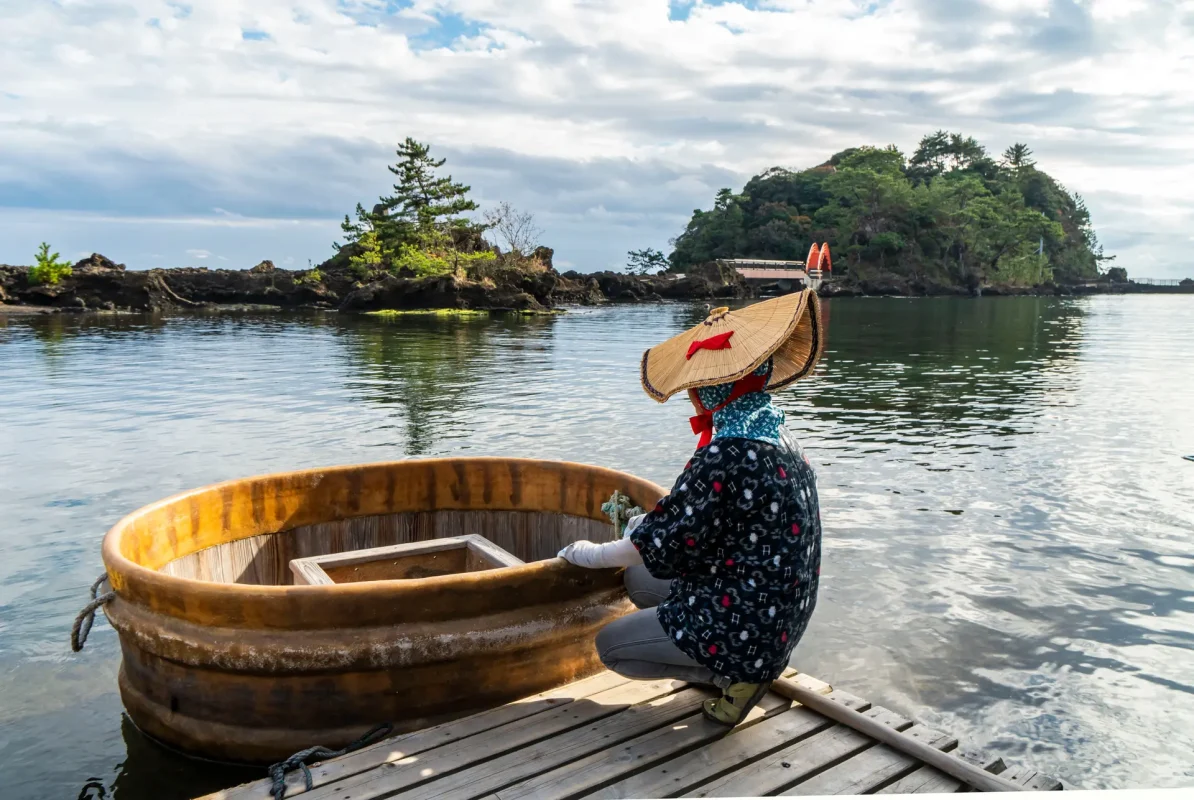
Sado, Japan’s sixth largest island, has a quaint port at Ogi known for tarai-bune, traditional wooden boats. The island is also famous for its world-renowned taiko drummers, continuing a rich cultural tradition. Once a place of exile for artists and academics, Sado now draws visitors to its rugged coasts, hidden beaches and lush terrain for outdoor activities.
DAY 5 – INE
A fishing village on the northern coast of the Tango Peninsula, where around 230 funaya — traditional boathouses built directly over the water — line the inner shore of a near-circular bay. Residents moor their boats on the ground floor and live above. The village has changed little in two centuries and carries national preservation status. Approached from the sea, the funaya present an unbroken wooden facade at the waterline — one of the most distinctive streetscapes in Japan.
DAY 5 & 6 – MAIZURU
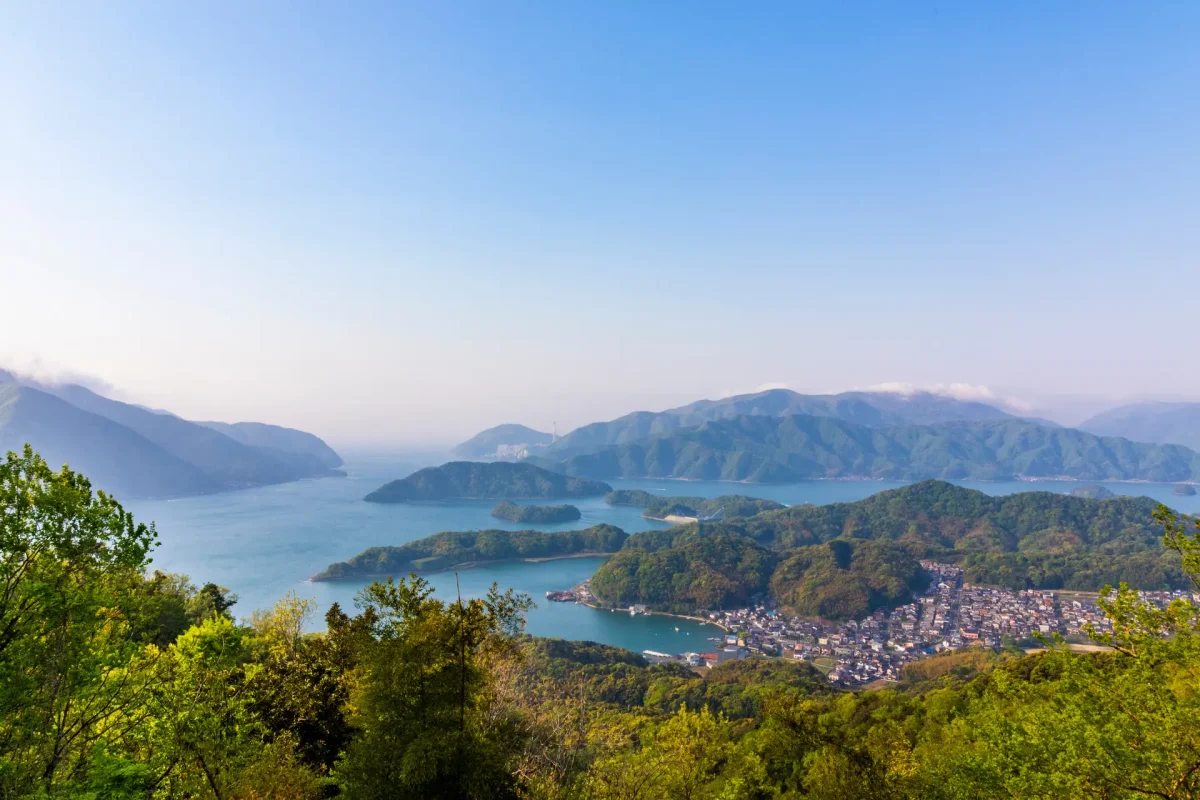
The port city of Maizuru in south-central Japan served as a major naval base and post-WWII repatriation port, where over 660,000 Japanese returned home – this history is remembered at the poignant Maizuru Repatriation Memorial Museum. Its scenic harbour, framed by forested hills, is overlooked by Goro Sky Tower atop Mt. Gorogatake. Brick Park evokes the city’s industrial past with Meiji-era warehouses housing the unique World Brick Museum.
DAY 7 – SAKAIMINATO
A haven for seafood lovers, manga fans and nature enthusiasts, Sakaiminto’s offerings are fairly eclectic for the seemingly slow-paced port town. Fish markets and world-class seafood restaurants line the streets, offering delights including local delicacy, Matsuba snow crab. You can also feast on Pacific bluefin tuna, Sakaiminto salmon, Natsuki rock oysters, swordtip squid and plenty more. The city was also once home to local hero, Shigeru Mizuki, a celebrated manga comic artist. Visit the Mizuki Shingeru museum for a fascinating insight into his life and the world of manga. Stretch your legs and enjoy a hike up the volcanic Mount Daisen, the highest mountain in the region (1730m). Or you may wish to take a gentler trek though the tranquil and restorative beech and cedar forests whilst connecting with nature and indulging in the Japanese pastime of forest bathing.
DAY 8 – BUSAN
Busan, South Korea’s second city, blends beaches and mountains with boutiques, lively cafes and delicious seafood in food alleys. The 120m-tall Busan Tower offers a sense of the skyscraper cityscape. Six beaches, including Haeundae and Gwangalli, attract visitors year-round. Gamcheon Culture Village, previously a slum, is now a kaleidoscopic haven of art nestled on the coastal mountain foothills, affectionately dubbed the Machu Picchu of Busan
DAY 9 – KARATSU
A castle town on the northern coast of Kyushu, where a 16th-century fortress sits on a pine-covered promontory above the bay. Karatsu is one of Japan’s principal centres of ceramic production — Karatsu ware has supplied tea ceremony vessels since the late Muromachi period, and working kilns still operate on the town’s outskirts. The beach of Niji-no-Matsubara, a coastal pine forest stretching several kilometres along the shore, has been considered one of Japan’s three most scenic pine groves for centuries
DAY 9 – CRUISING KANMON STRAIT
Sailing through the Kanmon Strait is challenging with strong currents and an S-shaped bend. One of the world’s busiest shipping lanes, the strait cuts a dramatic 38 km (24 mi) channel, narrowing to 700 m (0.4 mi) at its tightest point. The graceful Kanmon Bridge, a 1,068-m (3,504-ft) suspension bridge, spans the waterway between Honshu and Kyushu. Shimonoseki overlooks the strait from Honshu, while Moji district stands watch from Kyushu.
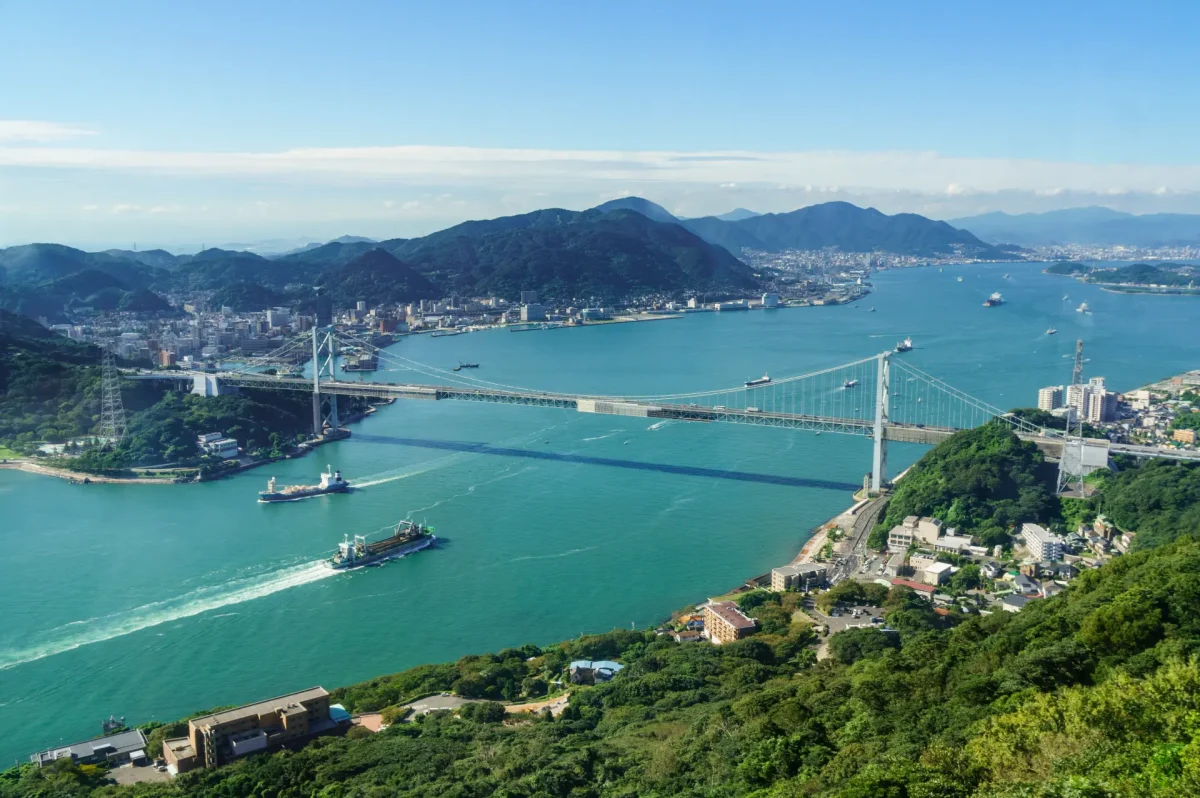
DAY 10 – UWAJIMA
Uwajima, a bustling coastal city, is anchored by the elegant Uwajima Castle, one of twelve Edo-period survivors, with spectacular cityscapes for hikers ascending to its keep. The Tensha-en Garden is a tranquil space with bamboo groves, towering culms and seasonal blooms. In the nearby village of Uchiko, the Old Quarter’s streets are lined with well-preserved wooden houses and merchant buildings, frozen in time from the 18th and 19th centuries.
DAY 11 – HIROSHIMA
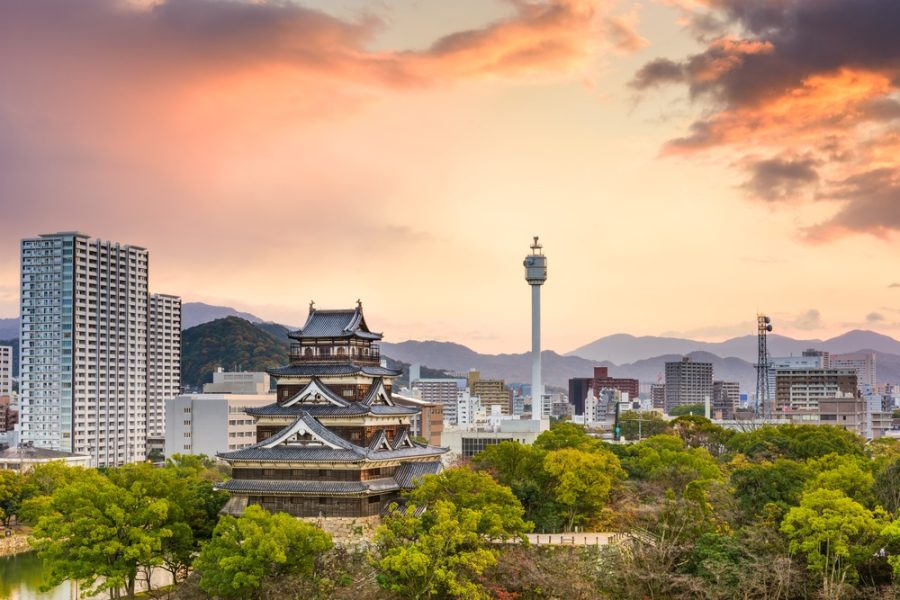
Hiroshima is a city of peace and resilience. The Hiroshima Peace Park and Museum, designated a UNESCO World Heritage Site, vividly portrays the aftermath of the atomic bombing. Designed by Kenzō Tange and inaugurated in 1955, the museum serves as a global symbol of peace, featuring a solemn cenotaph bearing the victims’ names and the Flame of Peace, lit in 1964. The Genbaku Dome stands as the sole original structure left at the blast site.